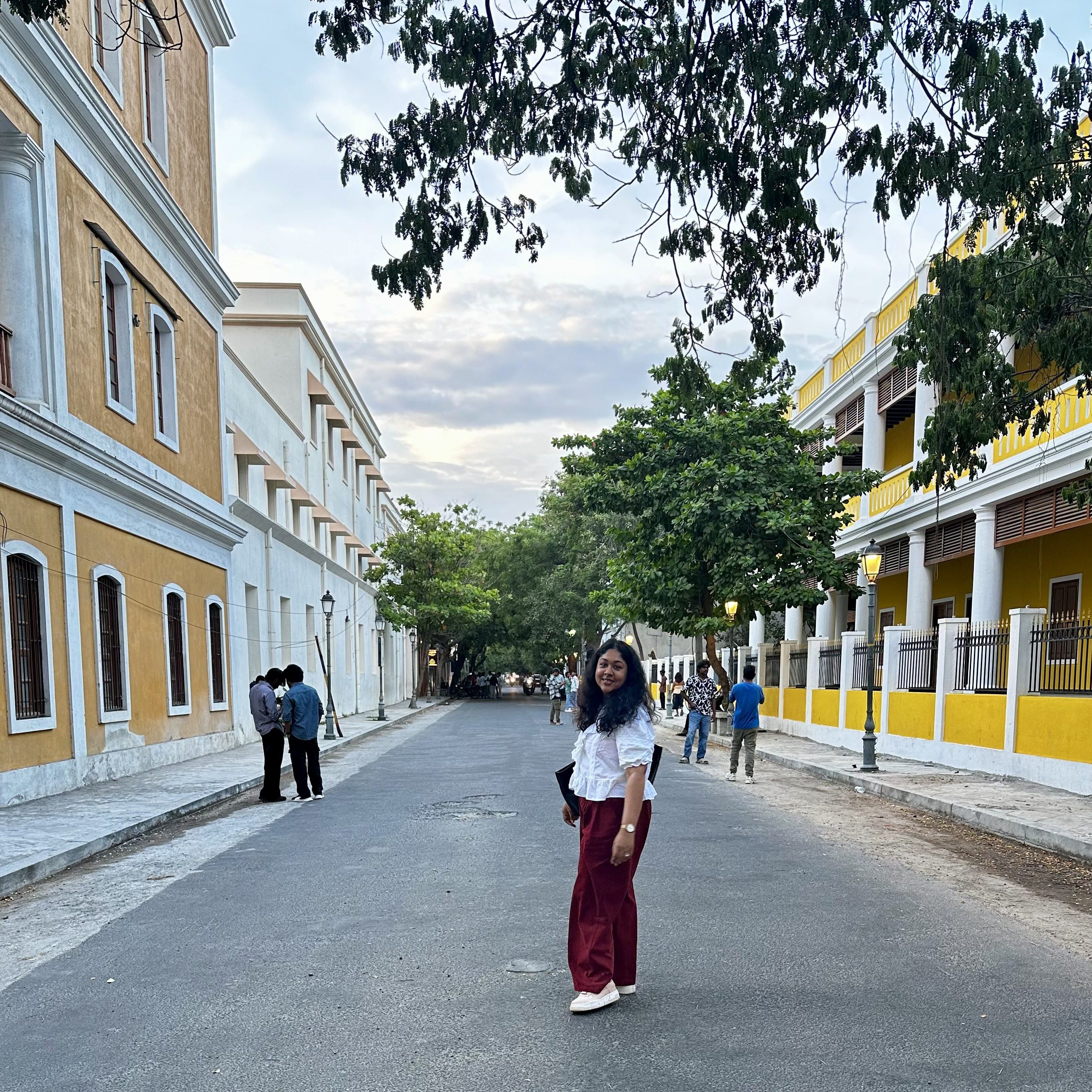
I want to be honest about something.
I run a travel platform. I’ve travelled alone across multiple countries. I’ve stood at the summit of Pikes Peak in Colorado by myself, navigated New York as a student, taken overnight buses in Oman, and moved cities more times than I can count for work and study.
And I still don’t feel fully comfortable travelling alone in India.
Not on trains. Not on buses. Not booking an experience with an operator I’ve never heard of, found through a link on some blog, with no way to verify whether they are legitimate or whether anyone will notice if something goes wrong.
I’m saying this not to be dramatic. I’m saying it because I suspect a lot of women reading this feel exactly the same way — and nobody in the travel industry ever says it out loud.
The discomfort is real and it is rational.
I grew up in Bareilly. I went to college in Manipal. I took buses and trains alone as a student — because I had to, because that’s how you get from one place to another when you’re 17 and your parents aren’t there to drive you.
I did it. It was fine. But fine is not the same as comfortable.
There’s a particular kind of alertness that women carry when they travel alone in India. The awareness of who is watching, where the exits are, whether the auto driver has locked the doors, whether the person who just sat down next to you on the train is going to stay quiet or not. It’s not paranoia. It’s pattern recognition built from a lifetime of being taught, explicitly and implicitly, that public spaces in India are not equally safe for everyone.
When I needed to travel somewhere alone, I always chose to fly if I could. Not because I couldn’t take a train. Because flying felt safer. Because the airport has security, the airline has my name on a manifest, and there are systems in place that make me harder to disappear from.
That calculus — the quiet, constant calculation of which mode of travel feels safe enough — is something I do automatically. I suspect most women in India do too.
The operator problem is different but just as real.
Beyond the physical safety of getting somewhere is the question of what happens when you arrive.
I genuinely love the idea of booking a local experience — a guided heritage walk, a wildlife safari, a cooking class in someone’s home. I find that kind of travel deeply meaningful. And yet, for most of my life, I haven’t done much of it in India.
The reason is trust.
When I book a guided experience abroad — in New York, in Istanbul, in Oman — there is a review system, a verified identity, a platform with accountability holding the operator to a standard.
In India, too many of the extraordinary local experiences exist entirely outside this infrastructure. A phone number on a blog post. A WhatsApp message to someone you’ve never heard of. A payment made in advance to an account you can’t verify. And then you show up — alone — and hope that the person on the other end is who they said they were.
Most of the time, they are. Indian hospitality is real. Local operators are mostly genuine, mostly good, mostly trying hard. But mostly is not the same as verified. And when you’re travelling alone, the cost of being wrong falls entirely on you.
This is why I built Muussaafirr.
Not because I had solo travel in India figured out. Because I didn’t — and I understood why.
The barriers that stop women from travelling more independently in India are not imaginary. They are structural. The discomfort on buses and trains is real. The trust gap with unknown operators is real. The feeling that the infrastructure of solo travel — the systems that make it feel safe to show up somewhere alone — simply doesn’t exist in the same way it does in other countries, that’s real too.
Muussaafirr is my attempt to close part of that gap.
Every operator on the platform has been personally contacted, evaluated, and agreed to a standard. Every experience has been listed with enough information to make a real decision. Every booking comes with a WhatsApp contact — a real person, not a bot — who knows your name and your travel date and will notice if something doesn’t go right.
It isn’t the complete answer to everything I’ve described above. I’m not going to pretend that a curated travel platform solves the deeper structural problem of safety for women in public spaces. It doesn’t. That problem is much larger and much older than anything I’m building.
But for the specific barrier of “I want to book a local experience but I don’t know if I can trust this operator” — that one I can actually fix. That one I’m fixing, one vetted listing at a time.
To the woman reading this who keeps almost booking the trip.
I see you. I am you.
The trip to Rishikesh that keeps getting deferred. The wildlife safari you saved and never booked. The heritage walk in a city you’ve lived near for years and never actually done because you weren’t sure how to do it alone and safely.
The experiences are real. The operators are legitimate. The trust is built in.
You still have to decide to go. That part is yours. But the part where you spend three hours trying to figure out whether you can trust an unknown operator with your time and safety — that part, I’ve done for you.
Muussaafirr — your friend with hidden gems and off-radar experiences across India.
 Muussaafirr
Share your thoughts