Most people experience Uttar Pradesh through a train window.
They pass through on the way to somewhere else — Agra for the Taj, Varanasi for the ghats, and then out again. The state that contains more UNESCO World Heritage Sites than most countries is treated like a transit corridor.
Uttarakhand gets slightly better treatment. People know Rishikesh. They know Haridwar. They know Mussoorie and Nainital because those are the hill stations their parents took them to as children. But beyond that — the lakes, the forests, the reserves, the rivers that most Indians have never heard of — there is an entire landscape that remains almost entirely undiscovered.
I grew up in Bareilly, which sits at the edge of both states. I know these places not as a tourist but as someone who spent eighteen years surrounded by them before leaving for college and eventually the world. And when I came back and started building Muussaafirr, these were the first states I turned to — not because they were easy, but because I knew what was there.
Here is what most people miss.
Uttar Pradesh — the wildlife state nobody talks about.
When Indians think of wildlife safaris, they think Ranthambore. Maybe Jim Corbett. If they’re adventurous, Kaziranga.
Almost nobody thinks of Uttar Pradesh.
This is a mistake. The Terai arc of northern UP — the strip of forest and grassland that runs along the Nepal border — contains some of the most extraordinary wildlife habitat in India. And unlike the famous reserves, it remains genuinely, peacefully undervisited.
Pilibhit Tiger Reserve sits two hours from Bareilly. It has one of the highest tiger densities in India relative to its size — and on any given safari morning, the forest roads are largely empty. No convoy of jeeps following a single tiger sighting. No WhatsApp groups coordinating who spotted what. Just the forest, the birds, and whatever decides to cross your path.
Dudhwa National Park is wilder and more remote. It protects tigers, one-horned rhinos, swamp deer, leopards, and over 400 species of birds in a landscape that feels genuinely untamed. The one-horned rhinos at Dudhwa are one of India’s most remarkable conservation stories — reintroduced in 1984 and carefully nurtured for four decades, with the first rhinos finally released into open forest in 2024. The same species as Kaziranga, in a forest two hours from Lucknow.
Katarniaghat Wildlife Sanctuary is the least known of the three and possibly the most extraordinary. The Girwa River runs through it — home to gharials, Gangetic dolphins, and mugger crocodiles in the same stretch of water. A boat safari on the Girwa at dawn is one of the most extraordinary wildlife experiences I have encountered anywhere in India.
Three reserves. Three completely different ecosystems. All in a state that most Indian travellers dismiss without a second thought.
Uttarakhand — beyond Rishikesh and Haridwar.
Rishikesh is extraordinary. I am not going to pretend otherwise. The bungee jumping at 117 metres above the Ganga, the white water rafting, the camping on the riverbank — these are genuinely world-class adventure experiences and Rishikesh earns every visitor it gets.
But Uttarakhand is much larger than Rishikesh, and the experiences beyond it are just as compelling.
Tehri Lake is 90 kilometres from Rishikesh. It sits in a valley in the Garhwal Himalayas, formed by the Tehri Dam on the Bhagirathi River — one of Asia’s largest reservoirs. The water is an impossible shade of blue-green. The surrounding hills are pine-forested and quiet. And on the lake itself, you can parasail, flyboard, jet ski, take a banana ride, or simply sit in a boat and watch the mountains reflect in the water.
Most people have driven past the turnoff to Tehri without knowing what was there. The ones who stop don’t regret it.
Bir Billing sits in Himachal Pradesh technically, but it is reached most naturally through Uttarakhand and draws from the same mountain landscape. It is the paragliding capital of Asia — a title that sounds like marketing until you are standing at the launch site at 2,400 metres watching pilots take off for cross-country flights that end 65 kilometres away in a different town. The longest flights go from Bir all the way to Manali. The air is cold, the valley is extraordinary, and the experience of floating above the Dhauladhar range in complete silence is one that stays with you.
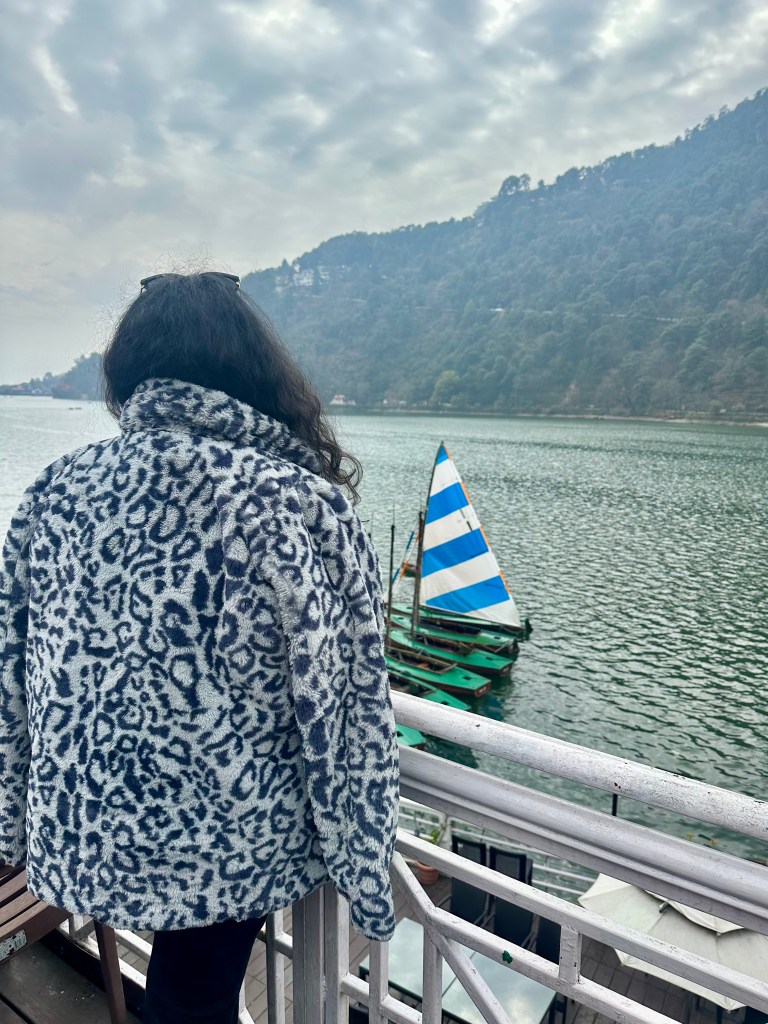
Nainital is known. But the experiences around it — hot air balloon over the lake, paragliding above Naukuchiyatal, water activities at Sattal — are almost entirely undiscovered even by people who visit regularly. The lake and the hill station are the postcard. Everything around them is the real experience.
Why these states first.
When I started building Muussaafirr, people asked me why I wasn’t starting with Rajasthan or Kerala or the Northeast — the states that everyone associates with aspirational Indian travel.
The honest answer is two things.
First, I know UP and Uttarakhand from the inside. I know what’s there because I grew up surrounded by it. I know which operators are legitimate because I’ve done the work of finding them — in Pilibhit, in Tehri, in Rishikesh, in Kannauj. That knowledge is not something you acquire from a desk. It comes from being from somewhere.
Second, these are the states where the gap between what exists and what is bookable is largest. Rajasthan has Ranthambore on every platform. Kerala has its backwater houseboats listed everywhere. But a boat safari on the Girwa River? A paragliding flight from Bir to Manali? A private pilgrimage circuit through Ujjain? These experiences exist. They are extraordinary. And until recently, you couldn’t find or book them anywhere.
That gap is exactly what Muussaafirr exists to close.
We started with the states most people drive through on the way to somewhere else. Because that’s where the real India is — in the places that haven’t been packaged yet.
Muussaafirr — your friend with hidden gems and off-radar experiences across India.


Share your thoughts